-
Introduction
In the realm of horology, the name Rolex stands as a towering testament to enduring craftsmanship, precision, and prestige. With a legacy that intertwines with the chronicles of explorers, visionaries, and luminaries, Rolex watches are more than just timepieces; they are symbols of excellence and human achievement. As we delve into the world of Rolex, we embark on a journey to understand what sets this iconic brand apart from its contemporaries, exploring the intricate details that define its essence.
Rolex, a name synonymous with luxury and reliability, has been at the forefront of watchmaking innovation since its inception in 1905. Founded by Hans Wilsdorf and Alfred Davis in London, the brand swiftly moved to Geneva, a city renowned for its watchmaking tradition, to further its quest for precision. It was here that Rolex pioneered numerous advancements that have since become benchmarks in the industry, including the creation of the first waterproof wristwatch, the Oyster, and the introduction of the Perpetual rotor, a self-winding mechanism that is at the heart of every modern automatic watch.
What truly makes a Rolex special goes beyond its technological achievements. It is the brand’s unwavering commitment to quality and its meticulous attention to detail that distinguish a Rolex from other watches. Each timepiece is a marvel of engineering, crafted from the finest materials, assembled with scrupulous precision, and rigorously tested to ensure unparalleled durability and accuracy. This dedication to perfection is evident in every aspect of a Rolex watch, from its elegant design and sophisticated functionality to its robust performance under the most extreme conditions.
As we explore the intricate world of Rolex, we will uncover the secrets behind its legendary status, examining the craftsmanship that goes into every component, the innovation that drives its quest for perfection, and the heritage that shapes its identity. Join us in this detailed guide as we celebrate the artistry, the history, and the enduring appeal of Rolex watches, a true emblem of modern masculinity and skilled living.
The Uniqueness of Rolex Watches: A Deep Dive
Rolex watches are not just timekeepers; they are masterpieces of precision engineering and design excellence. Each component of a Rolex watch, from its bracelet to its movement, is crafted with unmatched attention to detail, making every piece a symbol of luxury, durability, and innovation. Let’s explore the unique aspects that set Rolex watches apart in the horological world.
Sapphire Crystal: The Shield of Durability
In the 1970s, Rolex began to equip its watches with sapphire crystal, replacing the acrylic crystals used previously. Sapphire crystal, made from synthetic sapphire, is known for its exceptional hardness and scratch resistance, second only to diamond on the Mohs scale. This choice marked a significant advancement in watchmaking, as sapphire crystal not only enhances the watch’s durability and longevity but also maintains its clarity and luster over time. Its transparency and resistance to shattering make it the ideal material for preserving the watch’s legibility and beauty, even under the most challenging conditions.
The integration of the Cyclops lens into the sapphire crystal further exemplifies Rolex’s attention to detail and innovation. This combination ensures that the date is easily readable without compromising the crystal’s integrity or the watch’s waterproofness.
The Cyclops lens is one of Rolex’s most recognizable features, a magnifying bubble seamlessly integrated into the watch’s crystal, directly above the date display. Introduced in the early 1950s, this innovative addition enhances the legibility of the date by approximately 2.5 times, allowing wearers to easily read the date at a glance. Named after the one-eyed giant of Greek mythology, the Cyclops lens is not just a functional improvement; it’s a signature element that adds to the aesthetic identity of Rolex watches. Crafted with precision, the lens is meticulously applied to the sapphire crystal, ensuring durability and scratch resistance.
Bracelet
The bracelet of a Rolex watch is a testament to the brand’s commitment to comfort, durability, and aesthetics. Rolex offers a variety of bracelet types, including the Oyster, Oysterflex, Jubilee, and President, each with its distinctive style and functionality.
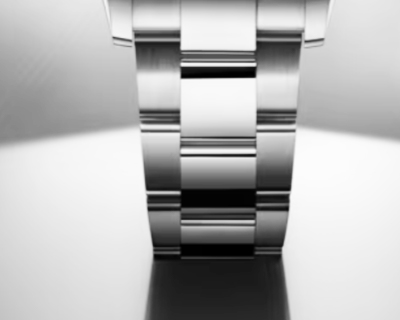
The Oyster bracelet, known for its robust and versatile design, features broad, flat links that ensure durability and comfort.
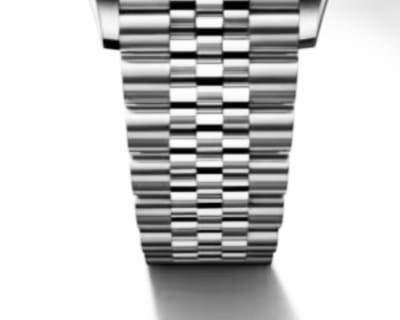
The Jubilee, with its elegant five-piece link design, combines strength with a more refined aesthetic, suitable for dressier occasions.
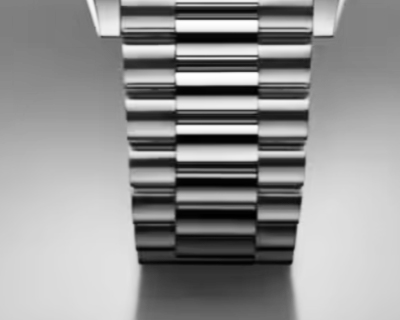
The prestigious President bracelet, often seen on Rolex’s Day-Date models, provides a perfect blend of sophistication and robustness, featuring semi-circular three-piece links.
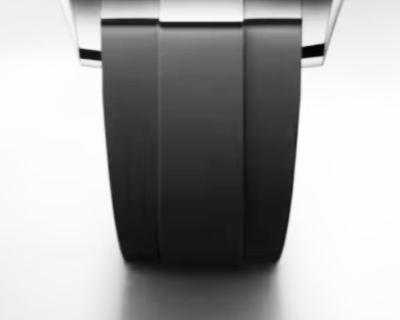
The Oysterflex bracelet represents a groundbreaking approach to watch bracelet design, blending the durability of a metal bracelet with the flexibility and comfort of a rubber strap.
This innovative bracelet features a flexible titanium and nickel alloy blade at its core, over-molded with high-performance black elastomer. The result is a bracelet that is robust yet supple, offering an unparalleled level of comfort without compromising the watch’s integrity or aesthetic appeal. The Oysterflex is equipped with an Oysterlock safety clasp, ensuring the watch remains securely on the wrist, and it includes the Rolex Glidelock extension system for fine adjustments.
The Oysterlock safety clasp prevents accidental opening, while the Crownclasp, found on some models, offers a seamless look with its hidden clasp mechanism. The Easylink comfort extension link is a notable feature allowing the wearer to easily adjust the bracelet length by approximately 5 mm, providing additional comfort in any condition.
For those requiring more significant adjustments, the Rolex Glidelock system allows for fine-tuning of the bracelet length in 2 mm increments, up to a total of 20 mm, without the need for tools. This feature is particularly beneficial for divers who may need to wear their watch over a wetsuit.
Bezel
Rolex bezels are not just decorative elements; they serve specific functions, enhancing the watch’s utility and character. From the unidirectional rotatable bezel of the Submariner, designed for divers to safely monitor their underwater time, to the fixed bezel of the Oyster Perpetual, each bezel type serves a purpose. The Cerachrom bezel, made from a hard ceramic material, is scratch-resistant and unaffected by UV rays, ensuring that the bezel maintains its color and luster over time.
The Crown: The Emblem of Rolex Royalty
The Rolex crown, the brand’s logo, is more than just a symbol; it’s a representation of Rolex’s status as the king of watches. But beyond its symbolic significance, the crown serves a critical functional purpose in Rolex’s quest for waterproofness and durability. The brand has developed different crown types to enhance the sealing capabilities of its watches:
- Twinlock Crown: Used on Rolex models guaranteed waterproof to 100 meters (330 feet), the Twinlock crown features a dual gasket system that securely seals the case against water ingress.
- Triplock Crown: Featured on Rolex’s professional dive watches, such as the Submariner and the Sea-Dweller, the Triplock system incorporates an additional gasket, extending waterproofness to depths of up to 300 meters (1,000 feet) for the Submariner and up to 1,220 meters (4,000 feet) for the Sea-Dweller. This triple-sealing crown ensures that Rolex watches can withstand the extreme pressures encountered in deep-sea diving.
The crown also serves as a testament to Rolex’s attention to detail, with each crown type meticulously designed and tested to meet the brand’s rigorous standards for durability and reliability.
Waterproofness
Rolex’s innovation in waterproofness began with the creation of the Oyster case in 1926, the world’s first waterproof wristwatch case. This revolutionary design features a hermetically sealed case that protects the movement from water, dust, and pressure. Models like the Submariner and the Sea-Dweller are designed for deep-sea diving, offering waterproofness to depths of 300 meters and 1,220 meters, respectively, thanks to additional innovations like the helium escape valve.
Superlative Chronometer Certification: Beyond COSC Standards
While COSC certification is a mark of precision, guaranteeing that a movement performs within -4 to +6 seconds per day, Rolex takes this a step further. After receiving the COSC certification, Rolex movements undergo an additional series of in-house tests, culminating in the designation of Superlative Chronometer. This prestigious title signifies that the watch operates within an astonishing accuracy of -2/+2 seconds per day, far surpassing COSC requirements. This level of precision reflects Rolex’s relentless pursuit of excellence and its commitment to offering wearers not just a watch, but a paragon of accuracy.
Movements: The Heartbeat of Precision
At the core of every Rolex watch lies its movement, the intricate mechanism that measures the passage of time with remarkable precision. Rolex prides itself on developing and manufacturing its movements in-house, a testament to the brand’s dedication to quality and independence. Each movement is a masterpiece of engineering, designed to ensure reliability, longevity, and accuracy.
Rolex offers a variety of movements, tailored to different watch models and functionalities, including:
- Perpetual Movements: These self-winding mechanical movements are the backbone of the majority of Rolex watches. They feature a perpetual rotor that harnesses the motion of the wearer’s wrist to wind the mainspring, ensuring a constant source of energy. Rolex’s perpetual movements are designed for utmost efficiency and durability, incorporating innovations such as the Parachrom hairspring, which offers greater resistance to shocks and temperature variations.
- Chronograph Movements: Rolex’s chronograph watches, like the Daytona, are equipped with movements that offer precise timing and stopwatch functions. These movements are engineered for high performance, featuring a column wheel and vertical clutch for smooth operation of the chronograph functions.
- GMT Movements: Designed for travelers, Rolex’s GMT movements allow the wearer to read multiple time zones simultaneously. Models like the GMT-Master II feature a movement that enables the hour hand to be set independently, a useful function for global explorers.
Gold and Precious Materials
Rolex’s unparalleled use of gold and precious materials in the crafting of its watches sets the standard for luxury and excellence in the horological world. The brand’s meticulous approach to selecting and processing these materials underscores its commitment to quality and craftsmanship, ensuring that each Rolex watch is not just a timepiece, but a work of art.
18 ct Gold: The Essence of Rolex Luxury
At the heart of Rolex’s prestige is its exclusive use of 18 ct gold, comprised of 750‰ (thousandths) pure gold mixed with a precise blend of elements including silver and copper, providing the different types of 18 ct gold: yellow, white, and Everose, Rolex’s exclusive pink gold alloy. Unique to the brand, each type of gold is produced in Rolex’s own foundry, allowing for unparalleled control over the quality and composition of the materials. This in-house production process ensures that every gold Rolex watch radiates with a signature luster that is both beautiful and durable.
Platinum: The Pinnacle of Prestige
Rolex selects platinum, the noblest of metals, for its most prestigious watches. Known for its vibrant whiteness and remarkable resistance, platinum is both aesthetically stunning and incredibly durable. Rolex primarily uses 950 platinum, an alloy consisting of 950‰ (thousandths) platinum, meticulously crafted to meet the brand’s high standards. This choice reflects Rolex’s dedication to offering materials that embody both luxury and longevity.
Diamonds and Gemstones: Precision and Perfection
Rolex’s commitment to excellence extends to its use of diamonds and gemstones, which are carefully selected based on strict criteria for quality, color, and clarity. Each stone is then hand-set by the brand’s skilled gem-setters using techniques that have been refined over generations. This ensures that the gemstones not only meet Rolex’s exacting standards but also enhance the watch’s design with their brilliant luster and precision placement. The brand’s dedication to selecting and setting diamonds and gemstones is a testament to its pursuit of creating watches that are as visually stunning as they are technically proficient.
Rolesor: The Harmony of Gold and Steel
In its two-tone watches, Rolex combines the luster of 18 ct gold with the strength of Oystersteel in a blend known as Rolesor. This combination offers a balance of elegance and durability, with the warm sheen of gold contrasting beautifully against the cool brilliance of steel. Rolesor is available in yellow, white, and Everose, providing a variety of options to cater to individual preferences while maintaining the brand’s standards of luxury and resilience.
Rolex’s use of 18 ct gold, platinum, diamonds, and gemstones, along with its innovative Rolesor combinations, exemplifies the brand’s mastery over materials that are not only precious but also capable of withstanding the tests of time. This dedication to using the finest materials reflects Rolex’s commitment to creating watches that are not just instruments of timekeeping but symbols of achievement and elegance.
Each Rolex watch is a culmination of the brand’s dedication to excellence, with its unique features contributing to its status as a symbol of luxury, innovation, and reliability. The combination of function, innovation, and luxurious materials makes Rolex watches not just timepieces, but legacies worn on the wrist.
The Complete 2024 Encyclopedia of Watches: Understanding Every Aspect of Horology – Mastering Time: The Distinctive Craftsmanship of Rolex Watches